
2022 Artist-in-Residence
The Delaware Contemporary is pleased to announce our three accepted artists for the 2021/2022 onsite Artist-In-Residence program. These artists were selected for a year-long residency program to occupy a fully-funded, shared studio. Artists-In-Residence will engage with their fellow cohort of residents, the community of Studios@ artists, TDC staff, and public outreach projects. Residents will work toward a cumulative exhibition at The Contemporary in the summer of 2022.
Nicholas Calaway
Nicholas Calaway engages with inert sculptural material and the exploration and development of form through drawing on paper. Developing the ideation with written notations of personal thoughts, the sculptural material is shaped through addition or subtraction from the form. The drawing process allows for a subconscious tap into the arena of memory, nostalgia, and experience - a place which welcomes the final stages of discovering the anthropomorphic form as a single physical, symbolic realization.
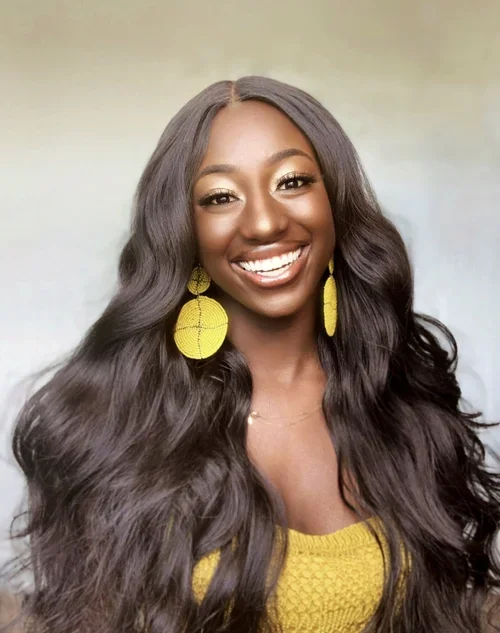
Stephanie Boateng
Stephanie Boateng is a student at the University of Delaware studying Organizational and Community Leadership with a minor in Art. Boateng’s 3D painted portraits are emotional beings - the smiles are almost contagious, filling one's soul with joy. Boateng focuses on happy black women, expressing their beauty through materials that represent happiness such as glitter, rhinestones, flowers, butterflies, and bright colors. The 3D elements speak to the viewer, allowing for an interaction in a very personal way.
Creative-in-Residence: The Collective
The Collective consists of three Wilmington, DE artists Shakira Hunt, Ty Collins, and Hashim Ahmad / 7God, who focus on the production of digital media and visual art with the goal of amplifying and supporting the advancement of artists, specifically black voices through visual art, education, and community. The Collective work focuses on mental health, branding development, and education through the mediums of paint, photography, and videography. The work and experiences of these three artists as Black, Indigenous, and People of Color (BIPOC) illustrate and construct narratives that challenge America’s status quo such as (classism, gender, and race).
